

Vertical Gardens In Schools And Universities: Educational Benefits & Green Inspiration

May
Lush and aesthetically pleasing, vertical gardens are not only gaining popularity for their vibrant effect, but they are transforming educational environments across Australia.
Their unique ability to foster a connection to nature plays a significant role in promoting environmental awareness, creativity, and holistic development.
From creating a calming setting for students to educating them on the importance of sustainability, vertical gardens in schools are a great way for them to appreciate the gift of nature!
Why Vertical Gardens Belong in Schools and Universities
When schools and universities adopt the growing trend of vertical gardens, they are providing the following benefits:
- Sustainability
Featuring a wide variety of blooming plants, vertical gardens improve air quality, promote biodiversity, and reduce the urban heat island effect. Not only do they contribute to sustainability, but they can encourage students to think deeply about their impact on the environment. - Curiosity
Exposure to green spaces can create an invigorating environment for students to learn and inspire their creativity. - Aesthetic value
Vertical gardens in schools are more than just a green wall; their beautiful display of plants can instantly create a more inviting and inspiring space for students.
Educational Benefits of Vertical Gardens for Students
Imagine a vibrant tapestry of greenery adorning your learning spaces. Beyond their captivating display, the educational benefits of vertical gardens are profound, including:
- Enhanced science and environmental literacy
For any plant to thrive, they have to be carefully maintained. Vertical gardens in schools offer students an interactive learning experience in caring for plants and how ecosystems are interconnected. - Increased engagement through hands-on learning
Studies have shown that hands-on learning can impact student engagement and is instrumental in developing their problem-solving skills. When students experience active learning, they are more likely to explore new ideas. This is where vertical gardens provide a tangible experience for them to learn about sustainable practices, plant biology, and garden techniques. - Mental health and well-being benefits
Exposure to nature can alleviate stress and anxiety and enhance overall mood. Green walls in educational settings provide students with a tranquil space to escape and restore, which is often needed in schools and universities. - Better air quality and concentration
Green spaces are natural filters that absorb harmful pollutants and release oxygen, helping to tackle air pollution.

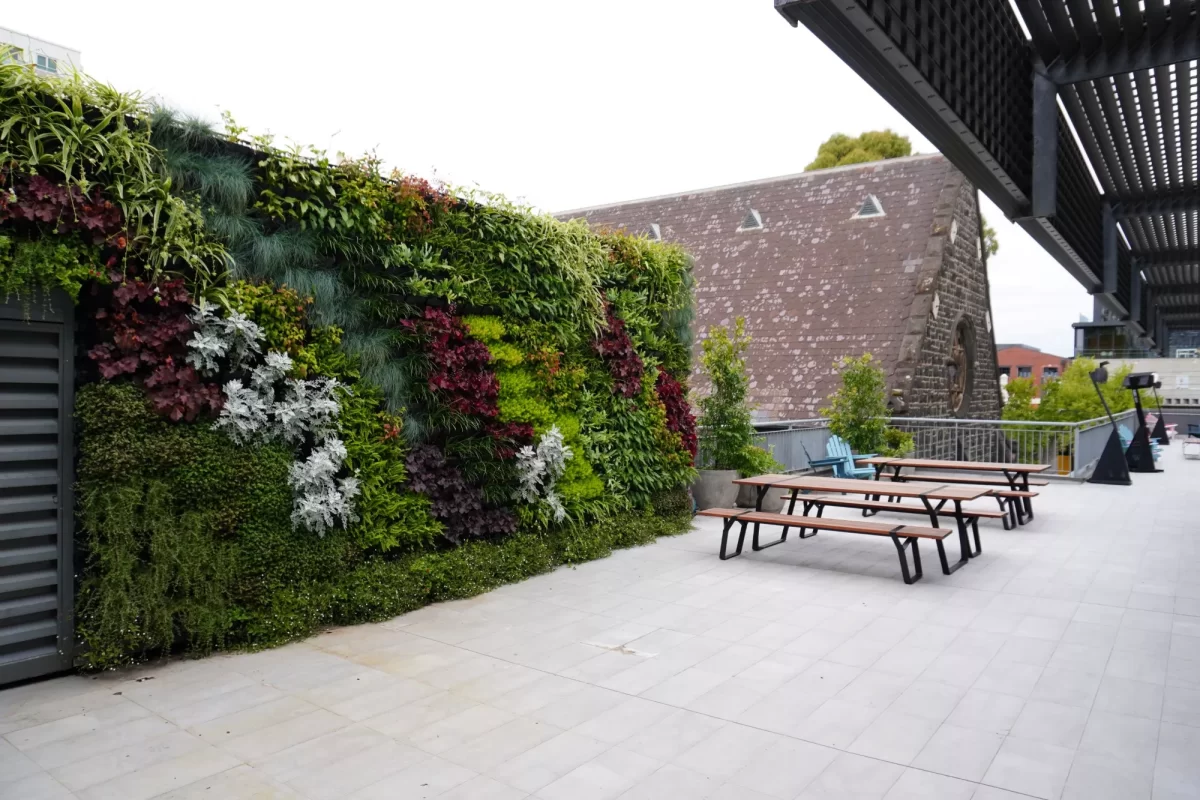
Green Walls in Educational Settings – How They Work
One of the biggest advantages of vertical gardens in schools is that they can be adapted to fit any space, but how do they work? Here are some crucial factors that contribute to their success:
- Irrigation systems
Setting up an irrigation system is essential for a vertical garden to flourish. Unlike traditional gardens, they have limited space for water retention and therefore require consistent water distribution. Often built on walls, these gardens may dry out quickly. An irrigation system provides consistent moisture, ensuring optimal growth. - Plant selection
Given its unique growing conditions, choosing the right plants becomes increasingly important in these green spaces. Not only should they be adaptable to their specific environments, but the selection of plants can also enhance the appeal. - Positioning
A well-designed structure is key. It ensures plants get enough sunlight and wind, and allows them to be beautifully displayed. - Maintenance
Vertical gardens need proper maintenance to continue blooming, including close monitoring of water and sunlight, using liquid fertiliser, and managing any pests.
Vertical Gardens for Universities – A Sustainable Campus Movement
Incorporating vertical gardens for universities is a great step towards sustainability. In the modern world, there’s a critical need to address issues such as pollution, loss of biodiversity, and climate change.
By engaging students, vertical gardens can help revolutionise the campus culture and inspire them to commit to a greener future.
How Vertical Gardens Australia Supports Educational Projects
There’s no doubt that vertical gardens provide a unique opportunity to enrich educational settings. At Vertical Gardens Australia, we design, build, and install vertical garden systems tailored to any space!
Our greenhouse has over 30,000 plants at various growth cycles, ensuring we’re able to provide healthy and mature plants from day one of installation.
With more than 2000 successful projects, our talented team has the expertise that will instantly beautify your school or university.
Custom Design & Consultation Services for Schools
Let us help you create a botanical masterpiece. To deepen your understanding, we offer free design consultations, no matter the size of your space. For more information, don’t hesitate to contact us today!
Frequently Asked Questions
Vertical gardens in schools create a stimulating environment with many benefits, including an increase in environmental awareness, improved well-being, and encouraging creativity.
Yes! The beauty of vertical gardens is that they can be tailored to any type of space. Whether it’s early learning centres or universities, there are many ways for us to customise and maintain these spaces.
Absolutely. We have a specialised maintenance team that understands what it takes to nurture a vibrant and healthy vertical garden. Our packages can be tailored to your needs and preferences.